The Proxy Clinic
Chad has 0.8 physicians per 10,000 people and 13.2% internet penetration — two numbers that eliminate conventional telemedicine. Telemedan built from the opposite direction: a solar-powered kiosk with embedded dermatoscope, stethoscope, otoscope, oximeter, and maternal fetal probe that connects 143,000 people across 11 provinces to qualified doctors for $2–$15 a consultation.
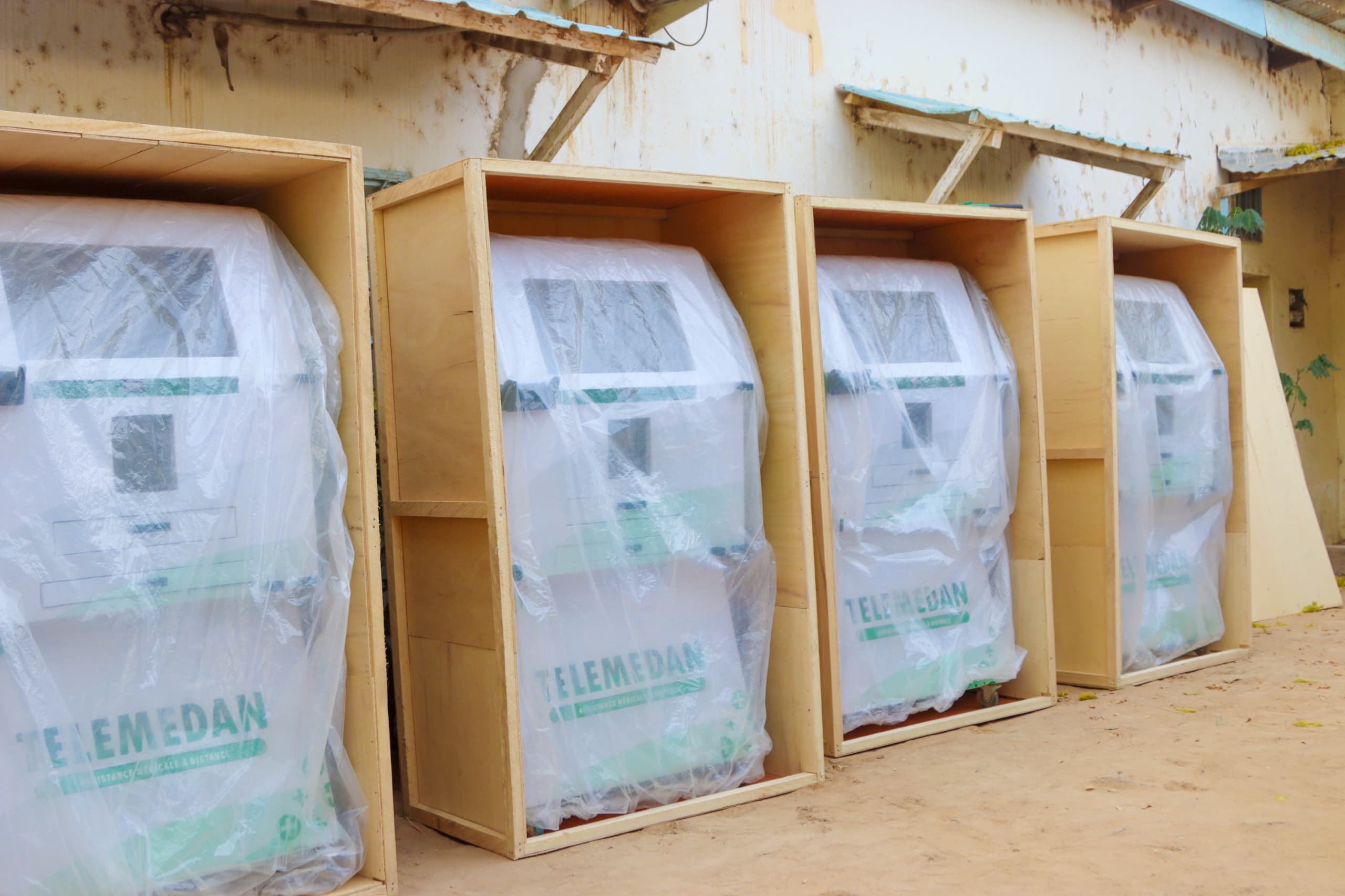
Photo: TechCabal / Telemedan
Chad has 0.8 clinicians per 10,000 people — against a WHO benchmark of 25 — and 13.2% internet penetration. Telemedan built from the supply side: a solar-powered kiosk equipped with dermatoscope, stethoscope, otoscope, oximeter, and maternal fetal probe. A trained local operator assists patients while a qualified doctor reads instrument outputs via hybrid 4G/satellite video. Consultations cost $2–$15, tied to Chad's public health insurance; each kiosk costs $10,000.
Thirty-seven kiosks are now operating across 11 provinces, reaching 143,000 people since 2021. A 2022 partnership with Chad's Ministry of Health channels government-credentialed doctors into the platform — making this a procurement model, not a consumer app. UNDP and the World Bank have provided grants. Target: 100 kiosks, 1 million people within three years.
The mechanism that separates this from video-call telemedicine is the diagnostic hardware layer. A dermatoscope image is medical evidence; a verbal description of a rash is not. Fetal probe readings enable referral decisions where the nearest obstetrician is hours away. The kiosk does not assume a smartphone, a connection, or a patient capable of self-diagnosis — it substitutes for all three.
Our take
Telemedicine apps assume three preconditions — a personal device, reliable connectivity, and a patient who can describe their symptoms accurately. In markets below 20% internet penetration, all three are unreliable. Telemedan's shift is to relocate the infrastructure from the patient to a shared kiosk operated by a trained local health worker who runs the diagnostic instruments, converting patient self-report into instrument data the remote doctor can actually read. The implication: digital health funders should stop measuring impact in app downloads. In low-connectivity markets, the access barrier is hardware deployment. Whoever capitalizes the kiosks controls the clinical reach.
What to do with this
App-based telemedicine grants in markets below 20% internet penetration reach a small, self-selected population. Redirect capital to hardware deployment — the $10,000-per-kiosk cost is a medical equipment financing problem, not a software adoption problem. Concessional capital to Ministries of Health for kiosk procurement is the matching instrument.
Treat the B2G kiosk model as a capital equipment line item, the same way ambulances or X-ray machines are budgeted. Chad's Ministry of Health partnership — government provides the doctors, Telemedan provides the hardware — is a procurement template other ministries can replicate without building new digital health bureaucracies.
Add USSD scheduling now. It is a one-sprint engineering project that extends appointment access to areas where even 4G connectivity fails. If your platform requires internet to book a consultation, you are rationing by connectivity in the markets you claim to serve.
One hundred kiosks at $10,000 each is a $1M problem. At Telemedan's deployment pace, a structured facility of that size funds a million-person clinical network. Scale the financing instrument to the hardware cost, not the VC funding round.
Go deeper
Related innovations
Daily intelligence
One named innovation per day. Free.
Sourced across health, climate, education, governance, and more — delivered in 2 minutes.