The Nafeer Network
When international aid agencies couldn't cross Sudan's front lines, 26,000 volunteers built a parallel humanitarian system rooted in a centuries-old tradition of collective action.
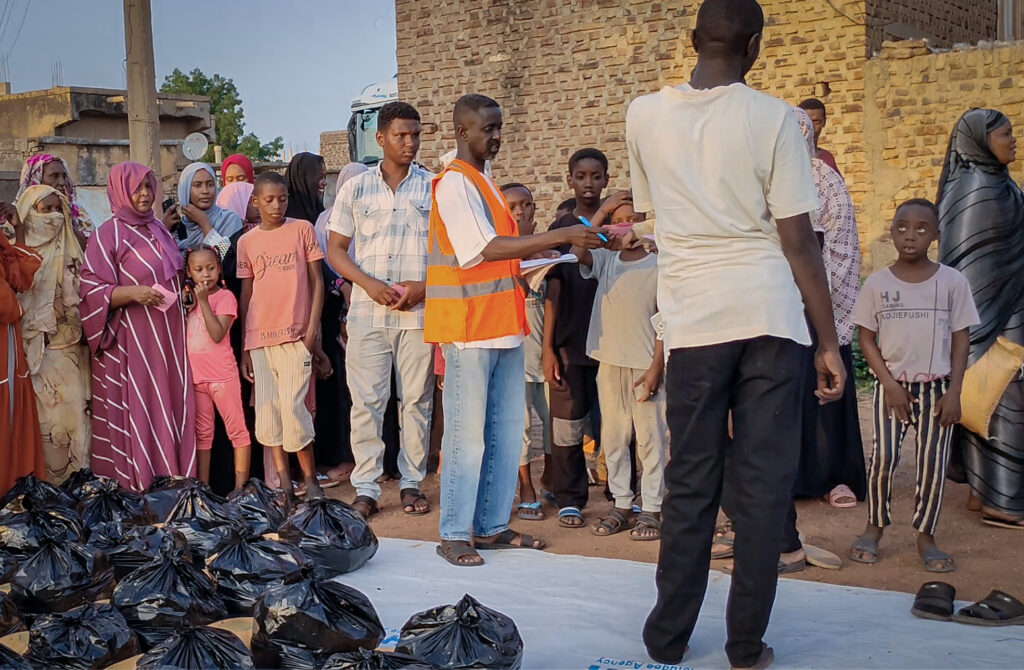
Photo: Cordaid
Sudan faces the world's largest displacement crisis — over 21 million people acutely food insecure, famine confirmed in multiple states, and most international aid agencies unable to cross front lines. Into this gap stepped a network built on *nafeer*, a centuries-old Sudanese tradition where communities mobilize collectively in times of need.
The Emergency Response Rooms are 737 neighborhood-level volunteer cells spanning all 18 Sudanese states. Their 26,000 volunteers — farmers, engineers, teachers, healthcare workers — run communal kitchens that have fed over 900,000 people and delivered food baskets to 400,000 more. They evacuate civilians, operate makeshift clinics, and maintain water infrastructure. Their cost structure is radical: "One dollar donated is one dollar spent," says communications officer Alsanosi Adam. "There are no percentages for operations."
The model has earned the 2025 Right Livelihood Award, the Chatham House Prize, and a Nobel Peace Prize nomination. Yet the volunteers who deliver the majority of Sudan's humanitarian aid receive less than 1% of international funding. At CGI 2025, the Mutual Aid Sudan Coalition committed $16 million in direct grants — a start, but a fraction of what the network's 11.5 million beneficiaries require. Nearly 160 volunteers have been killed.
Our take
This is task shifting at civilizational scale — not a stopgap, but proof that community-organized mutual aid can outperform formal humanitarian systems in access, speed, and cost efficiency. The shift: when less than 1% of international funding reaches local responders who deliver the majority of aid, the bottleneck isn't capacity — it's architecture. Funders designing crisis response should treat decentralized volunteer networks as primary infrastructure, not last-resort backup.
What to do with this
Redirect crisis funding to direct community grants via the Mutual Aid Sudan Coalition model — current architecture sends less than 1% to local responders who deliver the majority of aid
Formalize partnerships with ERR networks as primary delivery infrastructure in access-denied zones, rather than treating them as informal last-resort channels
Study the ERR model as a replicable template: decentralized volunteer cells, diaspora funding pipelines, and cultural traditions of mutual aid can be mapped in other conflict-prone regions before crises hit
Go deeper
Related innovations
Daily intelligence
One named innovation per day. Free.
Sourced across health, climate, education, governance, and more — delivered in 2 minutes.