The Midnight Referral
Fiji has the world's fastest-growing HIV epidemic — 2,003 new cases in 2025, a 17x increase in six years. Medical Services Pacific found 130 undiagnosed cases in three months by doing something clinics won't: parking a van after midnight in settlements where people are too afraid to walk through a clinic door.
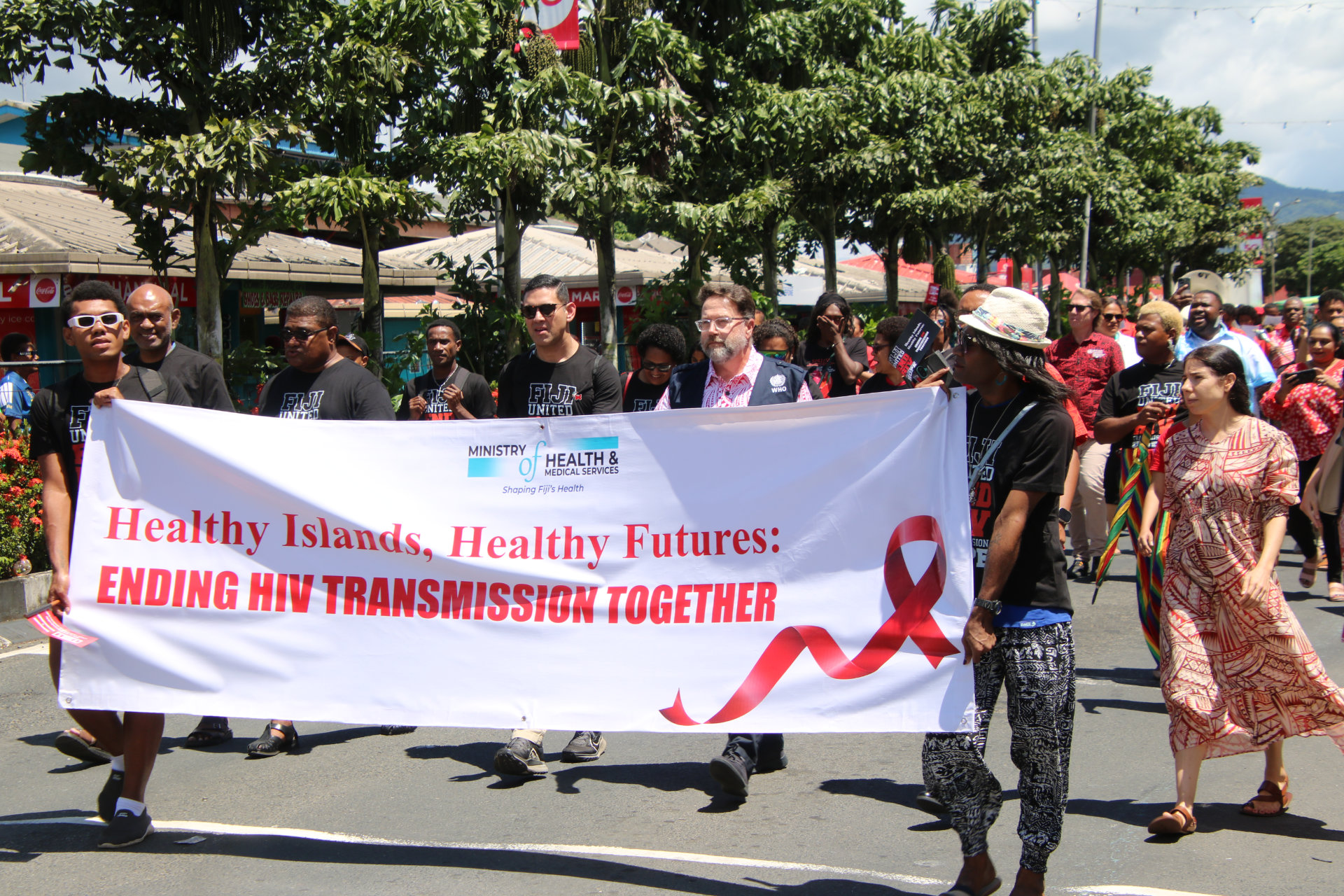
Photo: World Health Organization (WHO)
Fiji's HIV diagnosis rate rose from 13 to 226 per 100,000 between 2019 and 2025 — 2,003 new cases in a single year. UNAIDS estimates 5,900 people living with HIV in the country; only 36% know their status, and just 24% are on antiretroviral therapy. The gap isn't treatment availability. It's that the populations most at risk — sex workers, people who inject drugs, LGBTQI+ individuals — face discrimination severe enough to keep them away from any health facility operating under normal hours.
Medical Services Pacific's Moonlight Program addresses this by going to where people are, when they're there. After midnight, a van parks in Suva settlements. Peer educators from SAN Fiji and Rainbow Pride Foundation Fiji lead the outreach — without their established trust, clients don't come. Privacy tents, 15-minute rapid tests, pre- and post-counselling. Between December 2025 and March 2026, the program conducted 1,464 HIV and STI tests across three divisions. The reactive rate was 8.9% — nearly one in ten — with 130 cases identified and linked to care.
The mechanism that makes this different from standard mobile testing: clients aren't handed a result and a pamphlet. Forty-four of the 130 reactive cases started ART within the same quarter — accompanied through referral pathways to Ministry of Health treatment, not handed off to the system and hoped for. The program runs on a $125,000 sub-grant through IPPF's Voices of Resilience initiative, funded by the Australian and New Zealand governments. In a country adding 2,000 HIV cases per year, it found 130 invisible ones in three months.
Our take
The failure point in HIV programs isn't testing capacity — it's that positive tests don't become treatment. Clinics operate in daylight hours; stigmatized populations avoid them entirely. The Moonlight Program's triple-lock model — evening timing, peer educators as trust infrastructure, same-night warm handoff to ART — collapses the gap between detection and treatment. Its 8.9% reactive rate (versus the roughly 1–2% typical of general-population HIV testing) signals the model is finding the right people. Pacific funders should stop measuring success in tests conducted and start funding the peer educator relationships that make reaching those populations possible at all.
What to do with this
Fund the peer educators, not the van. The 8.9% reactive rate only exists because SAN Fiji and Rainbow Pride Foundation Fiji spent months building community trust before any clinic arrived. Budget peer partnership coordination as core program cost, not overhead.
Add linkage-to-care rate as a mandatory reporting metric alongside tests-conducted. The treatment gap — Fiji has 24% of PLHIV on ART — is invisible when programs report only testing volumes.
Export the timing model to other stigma-heavy conditions. Evening-hours + peer trust + warm handoff applies equally to TB, viral hepatitis, and maternal health in Pacific settings where daytime clinic visits carry social cost.
Go deeper
Related innovations
Daily intelligence
One named innovation per day. Free.
Sourced across health, climate, education, governance, and more — delivered in 2 minutes.