The Carbon Canopy
European companies paid for carbon credits. What they actually funded: 6 million trees across India's Araku Valley that cool coffee estates by 5°C and put fruit in farmers' markets.
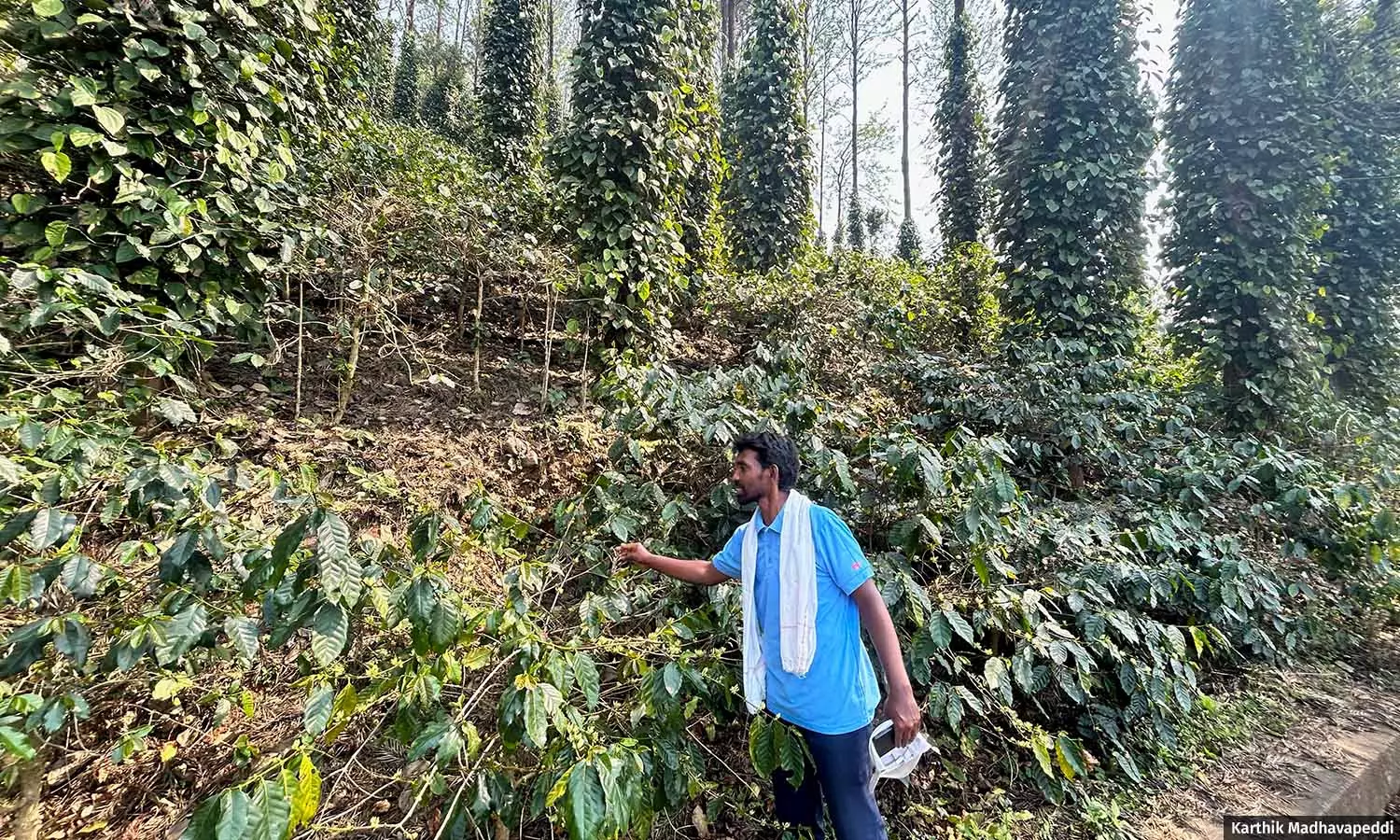
Photo: Karthik Madhusudhanan / IndiaSPEND
Climate change added 30 days of coffee-harming heat across India in five years. Suitable growing area may halve by 2050. In Andhra Pradesh's Araku Valley, 100,000 Adivasi tribal farmers depend on coffee — and the heat is closing in.
Naandi Foundation's model uses European carbon credit purchases to finance 19 varieties of fruit and timber trees planted among coffee. The canopy cools estates by 5°C while sequestering 1 million tons of CO2 over 20 years. Farmers sell guava, lemon, and citrus at local markets. The carbon credit pays for the tree; the tree pays the farmer.
Since 2010, 25,000 farmers across 720 villages have planted 6 million trees with 85% survival rates. A second phase is scaling to 40,000 farmers across 18,000 hectares. The model won Rockefeller's Food Vision 2050 Prize and was published as a G20 policy recommendation. In Kenya, the KACP project applies similar agroforestry-for-credits logic with 30,000 smallholders.
Our take
This is carbon credits as productive infrastructure, not abstract offsets. Instead of paying someone not to cut a tree, the credits fund 19 varieties of fruit and timber trees that generate ongoing farmer income. The shift matters: as corporate net-zero deadlines hit, the programs that turn credits into tangible assets — canopy, food, income — will outcompete programs that sell promises. Sustainability teams should audit whether their carbon purchases build something real.
What to do with this
Audit your carbon credit portfolio for productive vs. passive offsets. Credits that fund income-generating agroforestry have lower reversal risk and stronger community buy-in than conservation-only credits.
Back carbon credit intermediaries (like Livelihoods Fund) that bundle tree planting with smallholder income diversification. The dual return — climate + livelihoods — makes the investment more durable.
Create fast-track registration pathways for agroforestry carbon projects. India's 18,000-hectare Phase 2 shows the model scales, but regulatory bottlenecks slow replication.
Go deeper
Daily intelligence
One named innovation per day. Free.
Sourced across health, climate, education, governance, and more — delivered in 2 minutes.